Showing posts with label pasta. Show all posts

2.09.2009

pinche langosta

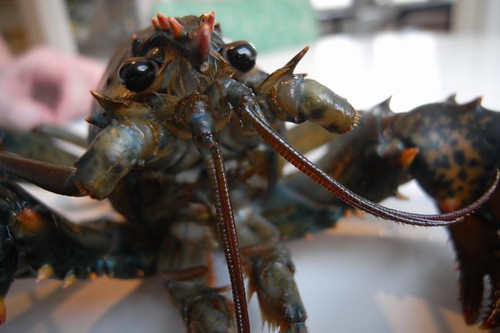
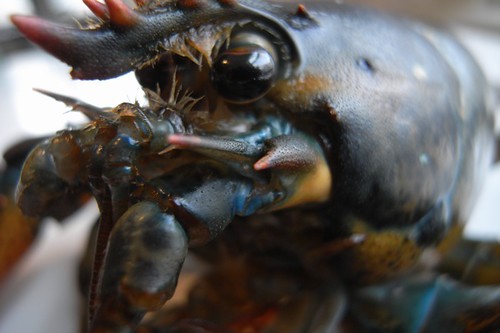
His name is Pinche. Pronounced "pinchey". Nevermind that "pinche langosta" in spanish pretty much means...well... it's not very nice. Or PC. But it's not at all an uncommon kitchen phrase.


We got this crustacean at QFC where they were having a sale. He's from Maine, and considering that a bunch of the seafood there comes from the Dominican Republic or Vietnam or Taiwan (gotta love the new origin labeling laws) this lobster is practically local!

He's also alive. I tried to get the cat to play with him but the cat was having none of it. Weird cat.


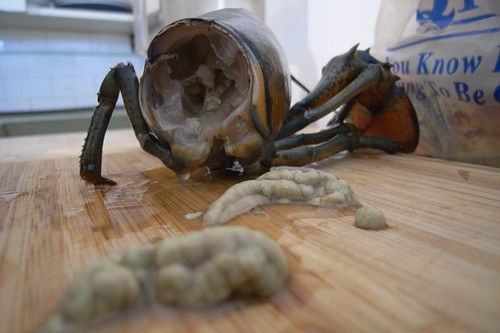
To dismember a lobster, you stab it in the back at the first tail joint and then pull the tail off. Supposedly the bits that emerge are tasty, but also potentially toxic. I didn't eat them.


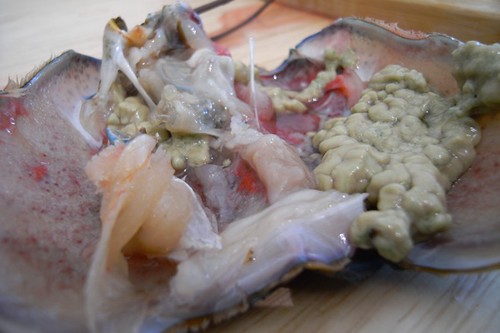
When you flay the upper portion open, it looks like a dissection or a dinner place. Technically, it's both. The creepy part? The heart KEEPS BEATING.


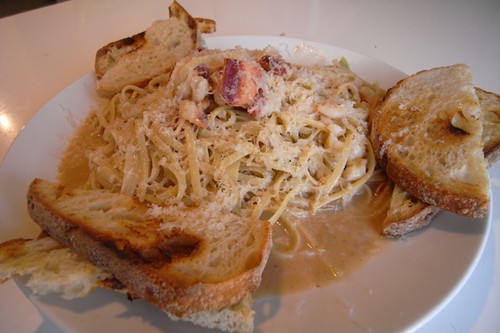
My favorite sous-chef friend broiled half the tail, and we ate that on its own, and then he made some stock. Sautee shells in olive oil until bright red, deglaze with brandy. Add enough water to cover, add a pinch of cayenne and a pinch of saffron. Steam the shells over this stock. Pull a cup and a half of stock out to add to pasta water to flavor the pasta, and then cook the rest of the stock down to form a sauce.

Pasta + lobster meat + sauce + grated ewephoria cheese + bread to soak up the sauciness:

7.01.2008

fresh pasta, redux

Because I'm a masochist, I decided to make fresh pasta again, using the recipe from Smitten Kitchen. I did this on the same day that I made the debacle that was the hazelnut brown butter cake. Did I mention that I'm a masochist?
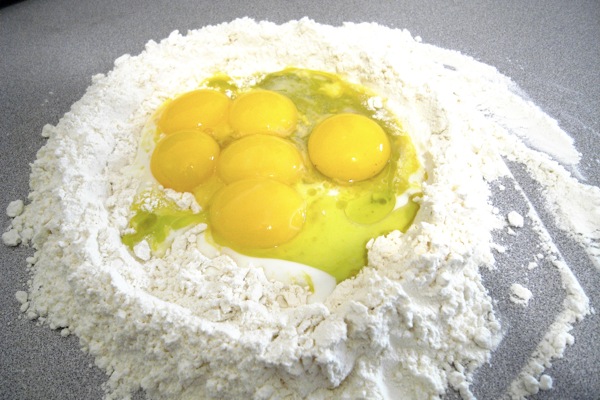
a pasta "nest"

This recipe involves no bowl. No spoon. Nothing but a smooth countertop, the ingredients, and your hands. Oh, and lots of time. I had nothing better to do because I had a cake in the oven, so hey, why not throw together some pasta dough?

You make a ring of flour and crack the eggs into it, adding the few other ingredients as well. Then, with your fingers, you start to stir, incorporating flour slowly from the walls as you go, trying not to slosh egg over the sides and all over your counter and floor.
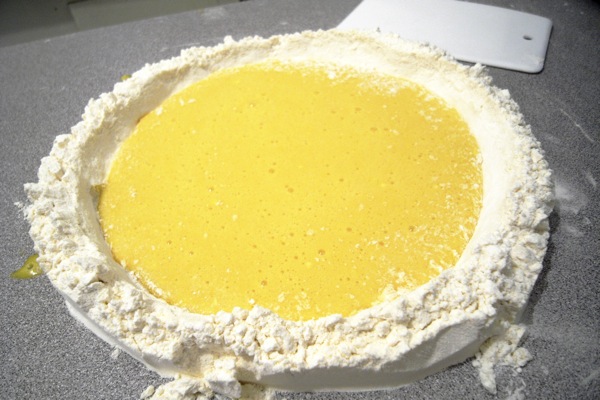
the pasta nest becomes a nest of goo

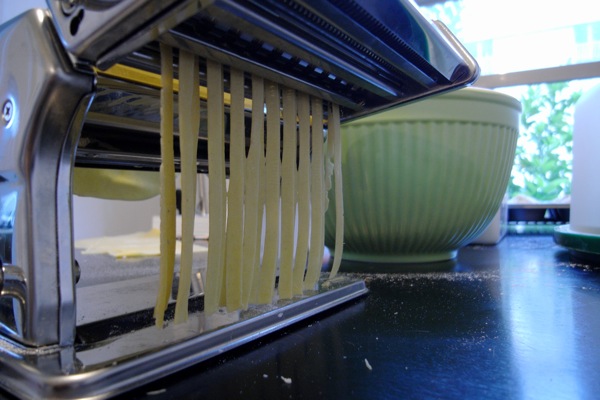
Eventually you work almost all of the flour in, and the dough becomes, well, dough, rather than goo. At this point you can start kneading, and go for as long as you can. Pretend it's exercise. Then the dough sits for a while, and then you put it through the machine.
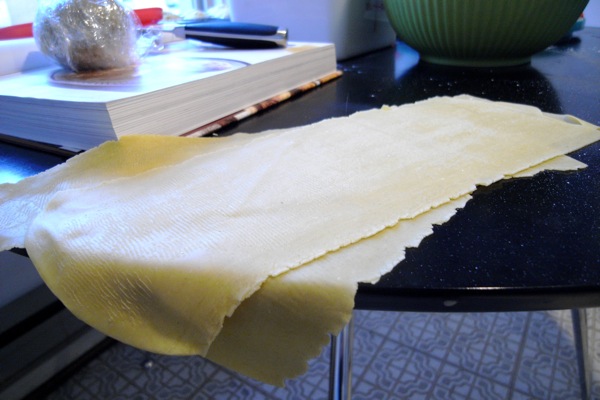
sheets of pasta dough

first in sheets and then in ribbons.

pasta!

Boil it for a few minutes (until it floats) and then finish it in whatever sauce you intend to use. Cooking it for the last minute or so in the sauce gives it a more rich flavor.
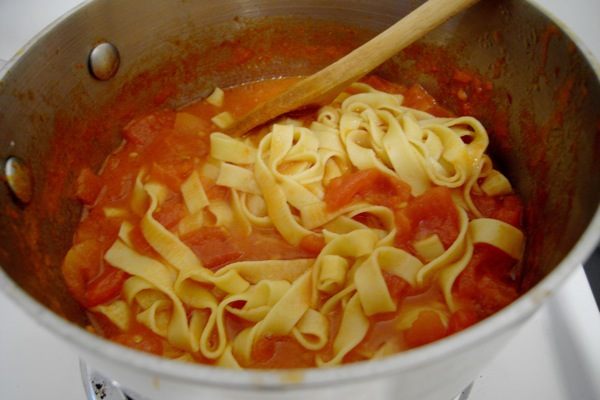
pasta in tomato-butter sauce

The sauce I used was very simple because I wanted to be able to taste the pasta. Tomatoes, butter, and an onion are all you need.

Making your own pasta is, as silly as this sounds, really rewarding. Like bread, it's not as hard as it looks and when you're done you can't believe you actually did it. It's also--like bread--so much more tasty than the store-bought kind.

I have one more recipe to try. This one was certainly the most labor-intensive of the bunch.
From Smitten Kitchen
Seven-Yolk Pasta Dough
Adapted from French Laundry Cookbook

1 3/4 cups (8 ounces) all-purpose flour
6 large egg yolks
1 large egg
1 1/2 teaspoons olive oil
1 tablespoon milk

Mound flour on a board or other surface and create a well in the center, pushing the flour to all sides to make a ring with sides about 1-inch wide. Make sure that the well is wide enough to hold all the eggs without spilling.

Pour the egg yolks, egg, oil and milk into the well. Use your fingers to break the eggs up. Still using your fingers, begin turning the eggs in a circular motion, keeping them within the well and not allowing them to spill over the sides. This circular motion allows the eggs to gradually pull in flour from the sides of the well; it is important that the flour not be incorporated too rapidly, or dough will be lumpy. Keep moving the eggs while slowly incorporating the flour. Using a pastry scraper, occasionally push the flour toward the eggs; the flour should be moved only enough to maintain the gradual incorporation of the flour, and the eggs should continue to be contained within the well. The mixture will thicken and eventually get too tight to keep turning with your fingers.

When the dough begins thickening and starts lifting itself from the board, begin incorporating the remaining flour with the pastry scraper by lifting the flour up and over the dough that’s beginning to form and cutting it into the dough. When the remaining flour from the sides of the well has been cut into the dough, the dough will still look shaggy. Bring the dough together with the palms of your hands and form it into a ball. It will look flaky but will hold together.

Knead the dough by pressing it, bit by bit, in a forward motion with the heels of your hands rather than folding it over on itself as you would with a bread dough. Re-form the dough into a ball and repeat the process several times. The dough should feel moist but not sticky. Let the dough rest for a few minutes while you clean the work surface.

Dust the clean work surface with a little flour. Knead the dough by pushing against it in a forward motion with the heels of your hands. Form the dough into a ball again and knead it again. Keep kneading in this forward motion until the dough becomes silky smooth. The dough is ready when you can pull your finger through it and the dough wants to snap back into place. The kneading process can take from 10 to 15 minutes.

Even if you think you are finished kneading, knead it for an extra 10 minutes; you cannot overknead this dough. It is important to work the dough long enough to pass the pull test; otherwise, when it rests, it will collapse.

Double-wrap the dough in plastic wrap to ensure that it does not dry out. Let the dough rest for at least 30 minutes and up to 1 hour before rolling it through a pasta machine. The dough can be made a day ahead, wrapped and refrigerated; bring to room temperature before proceeding.

The sauce I took from another food blog (a Seattle-ite also). Next time, I think I will try a puttanesca.

Tomato Sauce with Onion and Butter
Adapted from Essentials of Classic Italian Cooking, by Marcella Hazan
Via Orangette

2 cups whole, peeled, canned plum tomatoes, chopped, with their juices (about one 28-oz. can)
5 Tbsp. unsalted butter
1 medium yellow onion, peeled and cut in half
Salt, to taste

Combine the tomatoes, their juices, the butter, and the onion halves in a medium saucepan. Add a pinch or two of salt. Place over medium heat and bring to a simmer. Cook, uncovered, at a very slow but steady simmer, adjusting the heat as necessary, for about 45 minutes, or until droplets of fat float free from the tomato. Stir occasionally, mashing any large pieces of tomato with the back of a wooden spoon. Taste and salt as needed.

Discard the onion before tossing the sauce with pasta.

Yield: Enough sauce for about 1 pound of pasta, or 4 servings
6.12.2008

fresh pasta saga

I am totally intimidated by fresh pasta, despite the fact that it contains no yeast. I'd never made it, and I'd written it off as Something Other People Make, until I found this blog. The author is vulgar, snarky, hilarious, and a butcher. I was in lust. He makes pasta seem manageable somehow, in between all the swearing and drinking.

And that's pretty much what it's like.

fresh home-made pasta

I had three recipes to choose from: his, one at smitten kitchen, and the one that came with the pasta machine I bought at Ross that day. I opted for the one that came with the machine because it yielded enough pasta for six and I was throwing a potluck dinner party. Remember that rule about not trying new recipes out on guests? Right. There's a reason. A messy reason.

The process seems simple: 5 eggs and 3 cups of flour. Mix. Knead. Add more flour if it's a bit sticky. Let it rest for 30 minutes all wrapped in plastic and then roll it out and put it through the machine several times until it's thin and then again to cut it into fettuccine. Simple!

When the first guests arrived, including two people I hadn't met before, I was stirring the first bit of eggy floury dough. That shit was WET. Not just sticky, but cling-to-everything miserable. I added a handful more flour. It worked itself in, seemed okay, and then the mass got sticky again. Repeat. Repeat with what seemed like HALF A BAG OF FLOUR. Eventually, i gave up. My kitchen looked like a Columbian love-fest, since I had trailed flour everywhere I went. EVERYWHERE.

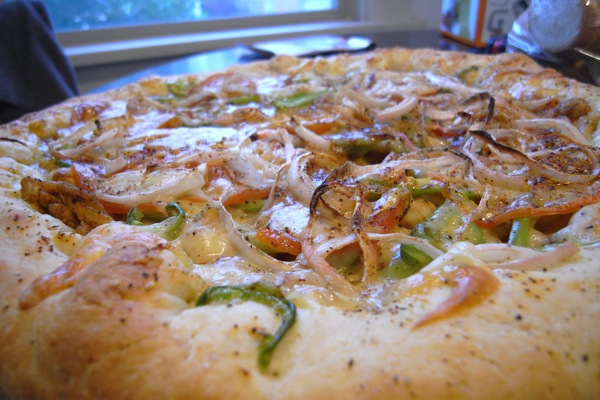
I had told my first guests that if the pasta experiment failed (as now seemed certain) then I would order pizza. At this point, my second guests arrived, bearing wine AND a homemade spicy chicken pizza. With cheese in the crust. Sometimes, god loves me. Only sometimes.

josh and allie's pizza

One of my guests, Josh, got really excited about the pasta machine and proceeded to attempt to screw it to every surface in the kitchen. This is when I realized that it's a very good thing that I didn't sell my dining table, since that's the only table that works for the pasta machine. I put the dough through a couple of times, but it was still too sticky and unworkable. I proclaimed defeat. Josh would not capitulate (makes sense, as he's not the one who spent an hour flouring the same mound of sticky hell). He put it through the machine, floured it, put it through again, floured it again, roll, flour, repeat. Fifteen minutes later THERE WAS PASTA DOUGH. We put it through the noodle-cutting bit, separated the strands, and boiled that shit until al dente.

In the end, it was a bit thick I think (we rolled until setting 4 or so, not a 9 like you're supposed to) and we didn't let it "rest" all sealed up like one should, and god knows how much flour was in there at the end... but what all this goes to say is that pasta is a lot harder to ruin than you might think. Everyone liked it! There was hardly any left over.

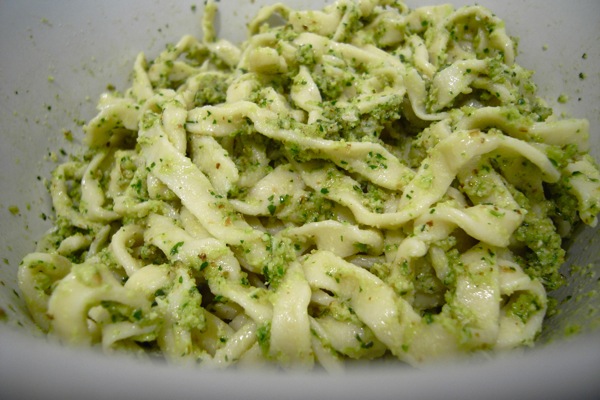
There was a pesto as well: after reading one of the comments to an earlier pesto pasta, I decided to make parsley-walnut pesto. At this point, I'd had a lot of wine, so measuring ingredients really wasn't going to happen. I threw some italian flat-leaf parsley, walnuts (toasted), olive oil, grated parmesean cheese, and pepper into the food processor until it tasted good, adjusting various quantities as needed. We also sauteed some crimini mushrooms to put over the top along with some shredded parmesean. The pesto was delicious and also tasted good days later on a baguette.

6.03.2008

spinach and orzo salad

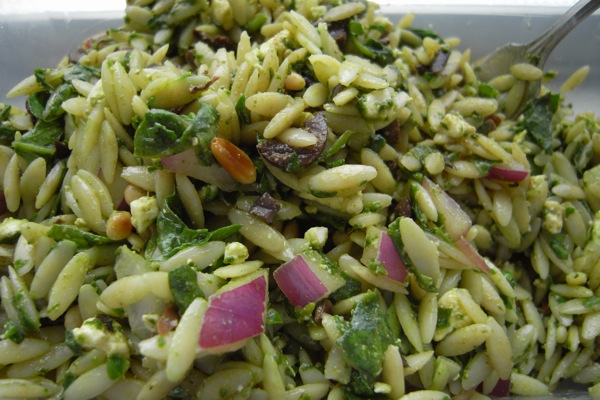
I chose to make this salad because I had everything on hand except the spinach and feta, and also because I'm on a green-foods kick. I think that after spending a week living on sausages while moving into the new apartment, I really needed the vitamins that my last few days of meals have provided. Hooray for craving the things you need! This salad gets better the longer it sits, as the flavors continue to meld. This makes it perfect for leftovers, or for a potluck or dinner party as you can make it the day before.

spinach and orzo pasta salad

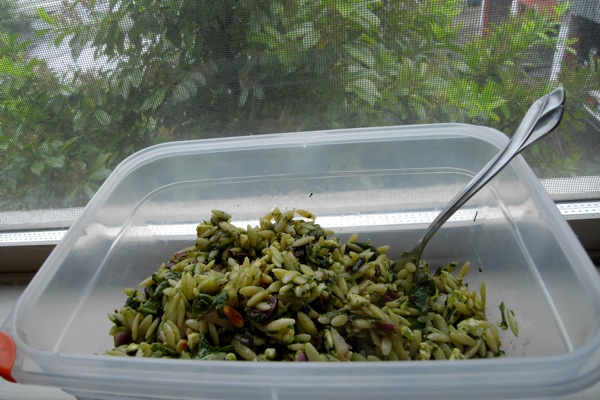
Picking a recipe, going to the store, cooking, taking pictures, doing the dishes, editing the photos, and writing the process up is actually a lot more work than one might think it is. So, I forgot to take pictures while cooking. In fact, I forgot about the photos until after I'd put the leftovers into tupperware and got it out again for lunch today. Forgive me.

spinach and orzo pasta salad

Spinach and Orzo Salad
from Simply Recipes

Ingredients

* 8 ounces orzo pasta
* Salt
* 1/4 cup pine nuts
* 6 ounces feta cheese, roughly crumbled
* 2 ounces Kalamata Greek olives pitted, roughly chopped, about 1/2 cup (about 20 olives)
* 4 ounces baby spinach
* 1/2 cup chopped red onion (about half a red onion)
* 3 Tbsp olive oil
* 1 Tbsp balsamic vinegar
* 1 Tbsp red wine vinegar (can substitute white vinegar or lemon juice)
* 1 teaspoon Dijon mustard
* Pinch dried basil
* Pinch dried tarragon
* Salt and freshly ground black pepper to taste

Method

1 Cook the orzo pasta. Bring to a boil a pot with 2 quarts of water in it. Once the water is boiling, salt it with a couple teaspoons of salt. Once the water returns to a boil add the orzo to the pot. Leave uncovered, cook on high heat with a vigorous boil. Put the timer on for 8-10 minutes, or whatever your pasta package says is appropriate for al dente (cooked but still a little firm). Drain. Rinse with cold water to cool quickly.

2 Toast the pine nuts by heating a small skillet on medium heat. Add the pine nuts and stir occasionally until the pine nuts are lightly browned. Pay attention or you'll burn the pine nuts.

3 Take half of the spinach and purée it in a food processor or blender, adding one tablespoon of the olive oil. Roughly chop the other half of the spinach. In a large serving bowl mix the spinach purée olive oil mixture in with cooked orzo until the pasta is well coated with the purée. Then gently mix in the remaining spinach, the red onion, feta cheese, pine nuts, and the Kalamata olives.

3 In a small jar, combine the remaining olive oil (2 Tbsp), balsamic vinegar, red wine vinegar, mustard, dried basil, and dried tarragon. Put a lid on the jar and shake to combine. (You can also just whisk together these ingredients in a small bowl, but the jar method works great to get a good emulsion.) Pour over orzo spinach mixture and gently mix in until well incorporated.

4 Chill for at least an hour before serving (the longer the better).

Serves 4.

rigatoni with five lilies and ricotta salata

Now that spring (summer?) is really here, I've been wanting more fresh things to eat. I also just moved and wanted to break in the new kitchen. And a friend from out of town visited and gave me a perfect excuse to make dinner. SO: I opened up the bookmarks and poked around.

rigatoni with five lilies and goat cheese

Everything for this recipe is easy to find, minus the Ricotta Salata. I substituted goat cheese (crumbled) and it worked well, so do not despair if you can't find the right cheese. As a bonus, everything except the cheese is also cheap.

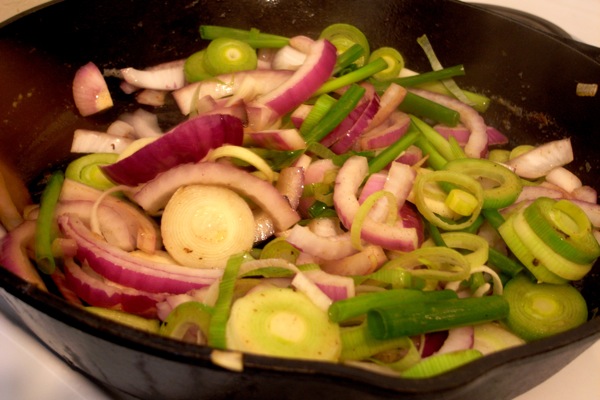
the five lilies

This recipe also tastes even better the next day, and it tastes good cold, which is bonus-good because a pound of pasta is enough for lots of leftovers. And it's easy to make. Do you need more reasons to try it? Fine: caramelized onions. LEEKS. Now go!

prep

Rigatoni with Five Lilies and Ricotta Salata
Adapted from The Babbo Cookbook and the San Francisco Chronicle
Stolen from Orangette

3 Tbs extra-virgin olive oil
1 lb. sweet onions, such as Walla Walla or Vidalia, cut in half from stem to root and then into ¼-inch slices
2 Tbs unsalted butter
5 medium garlic cloves, minced
½ lb. leeks, cut into 1/8-inch rings and washed
½ lb. red onions, quartered and sliced
1 bunch scallions, trimmed and cut into 2-inch lengths
½ cup water
Salt, to taste
Pepper, to taste
1 lb. rigatoni

To serve:
4 oz. ricotta salata, coarsely grated (or whatever cheese you can find)
¼ cup finely chopped fresh Italian parsley
1 small handful chives, finely chopped
Flaky sea salt, such as Maldon
Lemon wedges, optional

In a large (12- to 14-inch) skillet, warm the olive oil over medium heat until hot but not smoking. Add the sweet onions, and reduce the heat. Cook over medium-low, stirring occasionally, until softened and translucent; then raise the heat to medium and cook, stirring often, until deeply golden and caramelized. Remove the pan from the heat, and transfer the onions to a bowl. Set aside.

In the same skillet, heat the butter over medium heat. When it has stopped foaming and is thoroughly melted, add the garlic, leeks, red onion, and scallions, and cook, stirring regularly, until very soft and golden. Add the water, and cook until the liquid evaporates. Season lightly with salt. Remove from the heat, and stir in the sweet onions.

Bring a large pot of salted water to a boil, and cook the rigatoni until tender but al dente. In the last minute of cooking, return the onion mixture to medium-high heat. Drain the pasta, add it to the onion mixture, and toss over medium-high heat for 1 minute. Remove from the heat and toss more, if necessary, to thoroughly disperse the onions amidst the pasta. Serve immediately, topped with plenty of ricotta salata and sprinklings of parsley and chives. Salt as needed, and finish with a quick squeeze of lemon, if you like.

Yield: 4 servings

5.16.2008

pasta with walnut pesto and arugula

After leaving you with such sad photos for the last two recipes, I resolved to make up for it with this one.

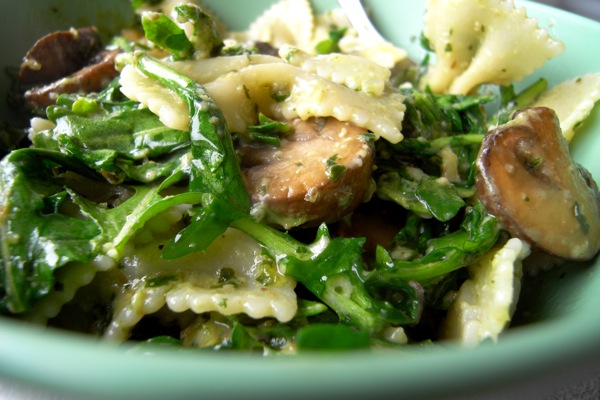
Basil is finally reappearing in the stores, and what better way to make use of it than pesto? This pesto is delicious, and I'd make it again on its own to eat with bread. The bright green color of the arugula and pesto in the pasta makes me feel like spring is really almost here.

pasta with walnut pesto and arugula

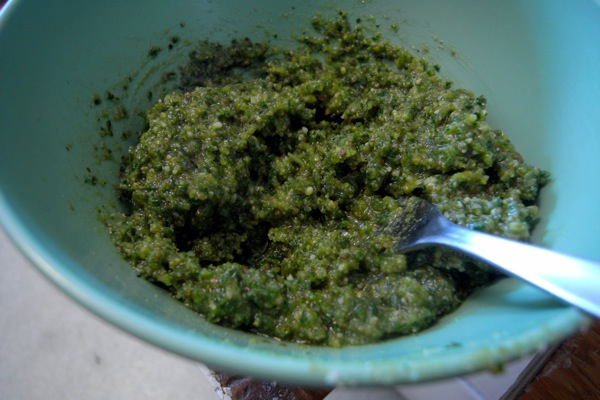
I thought making pesto would be hard, but really all you do is put a bunch of things into a blender and press a button. It's impossible to over-blend, so you can mix and taste and add and mix and taste.

walnut pesto

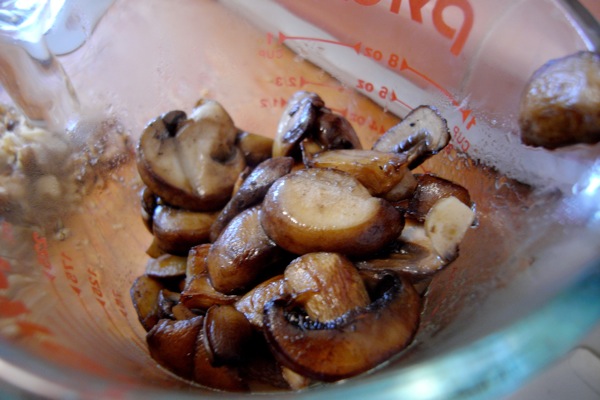
Once you've got the pesto finished, you cook some mushrooms (I used crimini, but any will do) in butter (I couldn't resist, but olive oil is fine too). The recipe says to use as garnish, but I really liked the earthiness the mushrooms added to the overall flavor, so I made a bunch so that they were a more substantial part of the dish. The mushrooms may take a while to cook, so start them at the same time you set the water on the stove to boil.

mushrooms

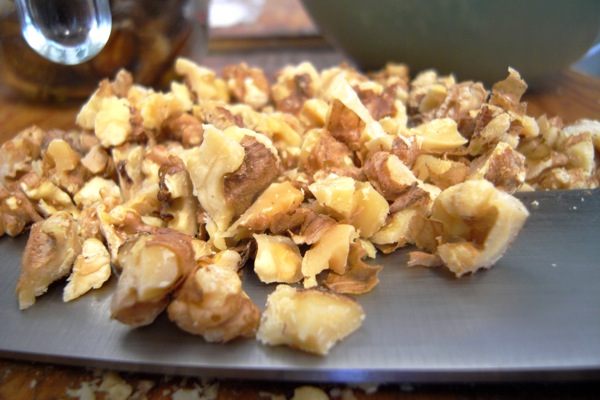
Make sure to get the walnuts nice and toasted, or they'll taste a little bitter.

walnuts

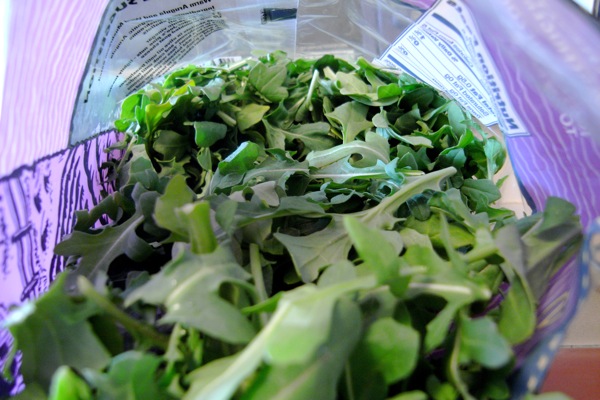
The only bitterness you want is from the arugula (or whatever bitter green you chose); the bite of the arugula is a nice contrast to the mushrooms and pesto and it keeps the pasta from feeling or tasting heavy. Trader Joe's has arugula for a really reasonable price.

arugula

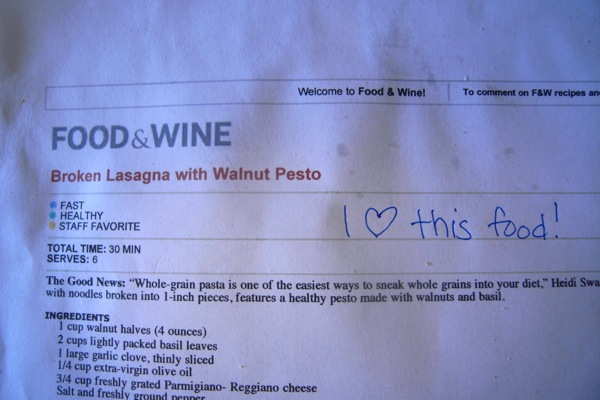
Sometimes, I make important notes on my recipes:

recipe

Pasta with Walnut Pesto and Arugula
From Food and Wine

Ingredients

1 cup walnut halves (4 ounces)
2 cups lightly packed basil leaves
1 large garlic clove, thinly sliced
1/4 cup extra-virgin olive oil
3/4 cup freshly grated Parmigiano- Reggiano cheese
Salt and freshly ground pepper
1 pound pasta-- something in small pieces, not long noodles
6 ounces watercress, arugula or other bitter greens, thick stems discarded and leaves coarsely chopped
Sautéed mushrooms, for serving


Directions

1. Preheat the oven to 350°. Bring a large pot of salted water to a boil. Spread the walnuts on a baking sheet and toast for 8 to 10 minutes, until they are fragrant and lightly browned. Let cool completely. Coarsely chop half of the walnuts and set the remaining toasted walnuts aside.
2. In a food processor, pulse the remaining walnuts with the basil and garlic until the walnuts are finely chopped. With the machine on, add the olive oil in a thin stream and process until the pesto is almost smooth. Add 1/2 cup of the cheese and pulse until just incorporated. Transfer the walnut pesto to a bowl and season it with salt and pepper.
3. Add the broken lasagna noodles to the boiling water and cook until al dente. Drain the pasta, reserving 1/2 cup of the pasta cooking water. Return the drained pasta to the pot. Add the watercress and walnut pesto and toss well. Add the reserved pasta water and toss again until well coated. Transfer the pasta to bowls, garnish with the remaining 1/4 cup of cheese, the chopped walnuts and sautéed mushrooms and serve.

4.02.2008

give ugly a chance

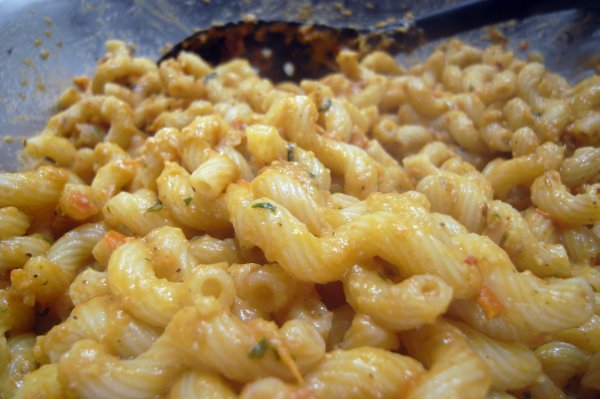
I know it's not pretty. But it's easy, and it's delicious, and sometimes, that's all you need.

pasta with eggplant puree

Just in case you were thinking of going into diabetic shock after all the desserts, here's some real food. Yeah, I needed it too. Don't worry, though-- there's more sugar to come. And butter. Possibly brownies.

Despite the total lack of cream or butter, this recipe turned out to be creamy, filling, and satisfying. Better is that the prep work takes ten minutes. If delicious made it pretty, this one would be a supermodel.

Rigatoni with Eggplant Puree
Giada DeLaurentis, Food Network
Adjustments by smitten kitchen (because, in case you hadn't noticed, her website is probably the best cookbook I own.)

1 small eggplant, cut into 1-inch cubes
1 pint cherry tomatoes
3 cloves garlic, whole
3 tablespoons olive oil
1 teaspoon salt
1 teaspoon freshly ground black pepper
1 teaspoon red pepper flakes
1/4 cup toasted pine nuts
1 pound rigatoni pasta
1/4 cup torn fresh mint leaves
3 tablespoons extra-virgin olive oil
1/2 cup grated Parmesan
Glug of balsamic or red wine vinegar or freshly-squeezed lemon juice (optional)

Preheat the oven to 400 degrees F.

In a large bowl combine the eggplant, cherry tomatoes, garlic, olive oil, salt, pepper, and red pepper flakes. Spread the vegetables out in an even layer on the baking sheet. Roast in the oven until the vegetables are tender and the eggplant is golden, about 35 minutes.

While the vegetables are roasting, place the pine nuts in a small baking dish. Place in the oven on the rack below the vegetables. Roast until golden, about 4-8 minutes (check them every minute or two after 4 minutes--they go from golden to burnt fast). Remove from the oven and reserve.

Meanwhile, bring a large pot of salted water to a boil over high heat. Add the pasta and cook until tender but still firm to the bite, stirring occasionally, about 8 to 10 minutes. Drain pasta into a large bowl and reserve 2 cups of the cooking liquid (I never used more than 1/2-3/4 cup, but your taste may differ).

Transfer the roasted vegetables to a food processor. Add the torn mint leaves and extra-virgin olive oil. Puree the vegetables.

Transfer the pureed vegetables to the bowl with the pasta and add the Parmesan. Stir to combine, adding the pasta cooking liquid 1/2 cup at a time until the pasta is as saucy as you like it, and add a glug of vinegar (optional). Sprinkle the pine nuts over the top and serve.